
Stage II of the AI-Sana Program
BLOCK 1 · HERO
Master artificial intelligence. Build an AI project that truly impresses
Stage 2 of the AI-SANA program was developed under the academic leadership of Paul Kim, PhD — Advisor at Lumos Capital Group, Member of the National AI Council under the President of the Republic of Kazakhstan, ex-Associate Dean and CTO at Stanford University Graduate School of Education
The world is changing faster than textbooks can be updated. AI is already transforming mining, agribusiness, healthcare, and finance — right here in Kazakhstan. Program 1 gives you the foundation: technology literacy, entrepreneurial thinking, and direct contact with those who are building the future right now.
8 weeks. 15 hours per week. Hands-on from day one.
The program is open to students of Kazakhstani universities · Free of charge
BLOCK 2 · WHO IS THIS FOR
The program was built for those who want to take action
No technical background required. Just the desire to learn and the readiness to work.
Program 1 is right for you if:
- You are a student at a Kazakhstani university and want to understand how AI will change
your profession and industry. - You are interested in entrepreneurship but don't know where to start.
- You want to work with real tools — code, platforms, case studies — not just theory.
- The context of Kazakhstan and Central Asia matters to you: local markets, local
challenges, regional opportunities. - You are ready for teamwork and critical thinking.
The program will demand effort:
This is not a course for passively watching videos. Every module includes practical assignments, team projects, and assessment on the SMILE platform. The final capstone is a full venture plan developed by a team.
BLOCK 3 · PROGRAM OUTCOMES
What you will gain from Program 1
A practitioner-level understanding of AI
From foundational concepts to writing real Python code in Google Colab. You will understand how machine learning algorithms, neural networks, and language models work — and be able to apply them to real-world problems.
An entrepreneurial lens for spotting opportunities
Through direct conversations with venture investors and founders, you will understand how the venture capital market works, how to evaluate an idea before building it, and how decisions are made on the other side of the pitch.
Industry knowledge where opportunities are born
The program covers 8 key industries of Kazakhstan and Central Asia. You will hear from practitioners about where AI is already creating value — and where no one has reached yet.
A complete business plan as your final deliverable
The capstone project is a fully developed startup concept: 240 critical questions across 12 phases and a structured plan evaluated by an AI system. The best projects are published in the Peer Gallery.
Alem.ai Residency
BLOCK 4 · ACADEMIC DIRECTOR
Under the guidance of Paul Kim, PhD
Advisor at Lumos Capital Group · Member of the National AI Council under the President of the Republic of Kazakhstan · Ex-Associate Dean & CTO, Stanford University Graduate School of Education · Ex-Chair, International Expert Committee of the World Bank.
The architecture of Stage 2 of the AI-SANA program is based on the principle of Never Assume — a key idea from Stanford's design thinking methodology. The premise is simple: before building anything, you need to honestly understand reality. Talk to people. Make sure you are solving the right problem. This is precisely the principle that separates startups that survive from those that don't.
In the program, Paul Kim personally leads the industry module: he introduces each topic, explains the strategic logic behind the choice of sectors, and helps students identify competitive advantages in the context of Kazakhstan and Central Asia.
"Knowledge and intelligence are becoming commoditized. What stays scarce is wisdom, character, and the courage to build."
— Paul Kim

BLOCK 5 · METHODOLOGY
How the program is structured
Every design decision in AI-SANA is grounded in educational technology research accumulated at Stanford over more than two decades.
Understanding precedes creation
Before approaching code or a startup idea, the student builds contextual understanding. Modules progress from the general to the specific: first a picture of the world, then the tools.
AI augments human thinking — it does not replace it
The program teaches students to use AI as a tool for amplifying their own thinking. From the very first sessions, students work with ChatGPT and Claude as working partners — for debugging code, testing hypotheses, and getting feedback.
Collaborative learning outperforms individual learning
Research shows that three people working on the same task significantly outperform those working alone. The entire assessment and project structure of the program is built on this principle.
The L-E-L-E pattern
Each topic follows the cycle: Lecture → Experiment → Lecture → Experiment. Theory is reinforced through immediate practice. The student doesn't just listen — they change parameters, observe results, ask questions.
The SMILE Platform
Stanford Mobile Inquiry-based Learning Environment — a platform developed at Stanford for large-scale education without sacrificing quality. All assignments, exams, and the capstone are completed on SMILE. The AI system evaluates work using Bloom's Taxonomy and provides personalized feedback.
БЛОК 6 · ПРОГРАММА — МОДУЛИ И СПИКЕРЫ
Семь модулей. Десять недель.
От фундамента к применению: технологии и предпринимательство → отраслевые кейсы → собственный стартап-проект.
Модуль 1.1 Неделя 1 · ~6 часов
Введение и диагностика
Программа начинается с диагностики: ИИ-система оценивает текущий уровень знаний и помогает сформировать персональный учебный маршрут. Модуль закладывает культуру совместной работы, которая будет сопровождать студентов до финального капстоуна.
Основные темы
- AI-based диагностика стартового уровня и формирование персонального маршрута
- Ориентация в платформе SMILE: структура, навигация, правила работы
- Академическая честность: принципы и практика
- Формирование команд (3 человека) и правила командной работы
- Обзор всей программы: что будет в каждом модуле и зачем
Формат: видео-введение · диагностический тест на SMILE · знакомство с командой
Module 1.2Weeks 1–2 · ~30 hours
Introduction to Artificial Intelligence
The technical and conceptual foundation of the entire program. The module opens with context rather than abstractions: AI is already at work in Kazakhstan's agriculture, healthcare, finance, and education. The student understands why this matters personally — and only then begins working with the tools.
All exercises are tied to specific Kazakhstani sectors: crop disease detection on farms, fraud in payment apps, forest fire prediction, customer segmentation, academic performance analytics.
Key topics:
- The AI ecosystem: Hugging Face, Kaggle, GitHub — where real models and data live
- First code in Google Colab: a particle swarm governed by three rules — complex behavior from simple principles
- Supervised machine learning: classification, k-NN, decision trees, random forests, regression
- Application: crop disease detection on Kazakhstani farms
- Unsupervised learning: k-Means clustering, data segmentation
- Working with pretrained Hugging Face models: NLP tasks without training from scratch
- ChatGPT API: integrating a language model into your own code
- RLHF: how ChatGPT and Claude were trained on human feedback
- Algorithmic bias: why a technically correct model can be ethically problematic
- Algorithm selection framework: from task type to the right method
Format: video + experiments in Google Colab (L-E-L-E) + team discussions + exams on SMILE
Module 1.3Weeks 2–4 · ~30 hours Introduction to Entrepreneurship
Introduction to Entrepreneurship
The technical and conceptual foundation of the entire program. The module opens with context rather than abstractions: AI is already at work in Kazakhstan's agriculture, healthcare, finance, and education. The student understands why this matters personally — and only then begins working with the tools.
All exercises are tied to specific Kazakhstani sectors: crop disease detection on farms, fraud in payment apps, forest fire prediction, customer segmentation, academic performance analytics.
Key topics:
- The mechanics of venture capital: how the VC market works, where the money comes from, who makes the decisions
- Investment criteria: how a startup is evaluated at an early stage
- Market sizing and validation: TAM/SAM/SOM, unit economics, speed
- Startup traditional business: the fundamental difference from an investor's perspective
- The founder's journey: pivot, failure, restart — real stories
- Venture-backed entrepreneurship in the AI era: how AI changes the speed and cost of building a company
- 5 criteria for finding an AI opportunity in any industry
- How to enter the venture ecosystem without connections or starting capital
Format: video interviews with investors and founders + case study analysis on SMILE + team discussions + exams
Speakers — Venture Investors

Board Observer at Exostellar
Partner at Mariton Partners
Co-Author of CMU Deep Tech Venture Ready Program
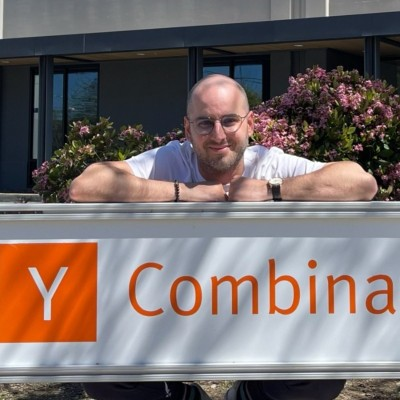
Investor in Y Combinator
7x founder · 3 exits

Early-Stage Investor · Angel Investor
Co-organizer, NYC Chinese Entrepreneurs Organization (NYCCEO)

IFC — International Finance Corporation
Speakers — Startup Founders


PhD in Imaging Science
Aidoc: global clinical AI platform — radiology, cardiology, neurology, emergency care



Ex-Machine Learning Engineer at Amazon
20+ years of AI research
6,900+ citations
20+ patents · Machine Learning and AI Scientist, Engineer, Entrepreneur, and Executive

Co-founder, AI Agent Innovation Group
Founder, Fenrici Group
Module 1.4 Weeks 4–6 · ~25 hours
AI Trends and Design Thinking
The module is built around three expert practitioners, each bringing a fundamentally different perspective on AI innovation: technical depth, an understanding of capital and markets, and entrepreneurial execution. Together they provide a complete picture of what it takes to build a successful AI venture.
The module includes a comparative analysis of the two dominant global AI models — American and Chinese — as a strategic exercise: finding Kazakhstan's unique place within this landscape.
Key topics:
- The Never Assume principle: why the most important thing is to test rather than assume
- The global AI landscape: Silicon Valley China — different models, different strategies
- Kazakhstan's positioning in global AI: competitive advantages and the window of opportunity
- How a VC evaluates an AI startup: the investor's key questions about accuracy, defensibility, and inference costs
- Design thinking as an entrepreneurial tool: Stanford school methodology
- Empathize → Define → Ideate → Prototype → Test: the cycle applied to real startup examples
- Entrepreneurial frameworks in the AI era: pivots, failures, unicorn exits
Format: video lectures + China vs. Silicon Valley analysis + team projects + exams on SMILE
Speakers

Head of AI at Glodon
Visiting Professor at Guangzhou University and China Academy of Art

Entrepreneur in Residence, Stanford University Graduate School of Education
Senior Advisor at GSV Ventures

Co-founder of the Entrepreneur-in-Residence Program and Faculty at Stanford
Ex-Board Member & Investor at Udemy
Module 1.5 Weeks 5–7 · ~35 hours
Industry Case Studies and Real-World Examples
The module is built entirely on direct conversations with investors and founders working in specific industries. Industry knowledge — where the pain points are, who makes decisions, what data is available, what regulatory barriers exist — is tacit knowledge that cannot be conveyed through a textbook.
The structure and synthesis of the module are provided by Paul Kim: his opening and closing sessions teach students to view different industries through a single analytical lens and extract transferable principles.
Key topics — common to all industries:
- Venture logic in a specific vertical: why an investor enters or passes
- Stakeholder mapping: who uses the product, who makes the purchase decision, who pays
- Industry data specifics: availability, quality, regulatory constraints
- Barriers to entry and moats: what makes an AI company defensible against copying
- Bridge founders: why insider industry knowledge is a structural competitive advantage
- Selling outcomes, not technology: how to sell the result rather than the technology
Format: video sessions + analytical assignments + team discussions + exams on SMILE
Part 1 — Foundational Industries
Education, mining, construction, data centers — industries that civilization rests upon, but which rarely attract the attention of AI entrepreneurs. These are precisely where the greatest unfilled opportunities lie.
Introduction and module synthesis
Member of the National AI Council under the President of Kazakhstan
Ex-Associate Dean and CTO at Stanford University Graduate School of Education
Ex-Chair of the International Expert Committee of the World Bank

— Industry: Education
Investor & Board Member: Thrive Career Wellness Platform, Core Education, Disprz
Board of Trustees at ETS

Industry: Mining & Robotics, Construction · 2 sessions
Mentor at FEDTECH (NASA, DHS)
Investment Committee at the Ontario Centers of Excellence
Director of the Board at The Massey Centre for Women
Ex-Founder and CEO of Exyn Technologies — $61M in equity raised

— Industry: Education · Kazakhstan
Secretary General at CPFed.kz

Industry: Data Centers & AI Infrastructure
Ex-Founding Partner at Yellow Rocks!
Impact investor in disruptive technologies: AI, Data, Deep Tech
Senior advisor and mentor in AI/ML, Blockchain, Edge Computing
Part 2 — Market-Forming Industries
Fintech, energy, healthcare, agribusiness — sectors with enormous markets that have historically been slow to adopt technology, but are now at an inflection point.

— Industry: Fintech & Financial Services
Ex-Vice President at Goldman Sachs

Industry: Energy
Investment Executive

Industry: Industrial Technology & Supply Chain

Industry: Food & Agriculture
Author of 5 entrepreneurship books
Board Chair of OPEN Silicon Valley and AspirePK.org
Faculty Director and Professor of the Practice at Northeastern University
Dean's Teaching Fellow & Continuing Lecturer at UC Berkeley
Founding President of the Brown University Club of Silicon Valley

Industry: Healthcare & Life Sciences
Ex-Director of Data Science & AI Innovation, Novartis Digital Office
AI Strategy and Deep Tech Advisor at Blue Zebra
Collaborating with MIT and Microsoft Research
Module 1.6 Week 7 · ~20 hours
Design Thinking for AI Innovation
The most hands-on module in the program. Students complete the full Stanford d.school cycle — Empathize → Define → Ideate → Prototype → Test — applied to their own startup idea. The Never Assume principle here is not read about but lived through in practice.
The module teaches students to work with uncertainty: a prototype should match the level of understanding of the problem, not design ambitions. At a stage of high uncertainty, paper sketches and verbal descriptions are more valuable than polished presentations.
Key topics:
- Empathize: observing and interviewing real users, documenting insights
- Define: formulating the problem from the user's perspective, Point of View Statement
- Ideate: idea generation methods — brainstorming, SCAMPER, worst possible idea
- Prototype: the principle of matching the prototype to the level of understanding — paper prototype vs. digital
- Test: how to test hypotheses quickly and cheaply, failure budget
- AI as a partner in the design process: idea generation, feedback analysis, iteration
- What an investor sees in a prototype: signals of team maturity red flags
Format: workshop (full design thinking cycle) + prototyping + team sessions + exam on SMILE
Speaker and author
Member of the National AI Council under the President of Kazakhstan
Ex-Associate Dean and CTO at Stanford University Graduate School of Education
Ex-Chair of the International Expert Committee of the World Bank
Co-authors
Member of the National AI Council under the President of Kazakhstan
Head of AI at Glodon
Visiting Professor at Guangzhou University and China Academy of Art
Entrepreneur in Residence, Stanford University Graduate School of Education
Senior Advisor at GSV Ventures
Co-founder of the Entrepreneur-in-Residence Program and Faculty at Stanford
Ex-Board Member & Investor at Udemy
Module 1.7 Week 8 · ~20 hours
Capstone — Your Startup
The final project is a synthesis of everything studied throughout the program. Teams develop a complete startup concept through two sequential stages on the SMILE platform.
- The Swiss Cheese Model: how vulnerabilities across different dimensions of a venture lead to failure
- 12 key phases of startup development: vision, market, user, business model, team, finances, and others
- Principles of formulating strong questions: analysis vs. reproduction
- Venture Plan in Project Mode: a structured plan across 12 phases
BLOCK 7 · INDUSTRIES
Eight industries. Real Kazakhstani context with the potential for global scale
The program deliberately selected industries in which Kazakhstan and Central Asia hold natural advantages — and where AI has yet to realize its potential.
Mining & Natural Resources · Agribusiness & Food · Healthcare · Data Centers & AI Infrastructure · Construction · Energy · Fintech · Education
Plus four cross-industry domains: Robotics & Automation · HR & Talent Management · Media, Marketing & Sales · Security
Kazakhstan is one of the world's leaders in mining, a major energy producer, and a fast-growing market with a young, tech-savvy population. The program helps students see these factors not as limitations, but as competitive advantages for building globally significant companies.
"Talent is everywhere. Opportunity is unevenly distributed."
— Paul Kim, Stanford
BLOCK 8 · CALL TO ACTION
Start Program 1
Registration is open to students of Kazakhstani universities.
AI is not waiting for you to feel ready. Program 1 is your chance to master the technology, meet the people building it, and come out with a real project in hand.
"Have you AI'd?"
— Michael Zhang, AI entrepreneur, program speaker
● Top-performing students upon completion will be admitted to the next, more advanced program