
Stage III of the AI-Sana Program
Stage 3
Digital Solutions for Industry Challenges
Using AI and Team Leadership
AI-SANA Program 2 for students of Kazakhstan universities
Academic Director: Paul Kim, PhD · Stanford University GSE
Version 1.0 · 2025–2026
BLOCK 1 · HERO
Build an AI solution that a real industry needs.
AI-SANA Stage 3 is the continuation for those who have already completed the first program and are ready to move forward. Developed under the academic leadership of Paul Kim, PhD — Advisor at Lumos Capital Group, member of the National AI Council under the President of the Republic of Kazakhstan, former Associate Dean and CTO of Stanford University Graduate School of Education.
You already understand how AI works. Now it is time to learn how to build. Stage 3 is 16 weeks in which you will go from a neural network written from scratch to a finished MVP that you will present to investors. Not a concept on paper — a working product.
Along the way, you will hear from 40 people who are building and financing AI companies right now: venture investors from Alpha Intelligence Capital and IFC, unicorn founders, lawyers from Wiley Rein, the CFO of an Australian unicorn, and six Kazakhstani entrepreneurs who have already been through Stanford and Silicon Valley.
Of Kazakhstan’s 700,000 students, 60,000 will advance to Stage 3. The program is designed for those who intend to build not a local project, but a company capable of entering the global market.
16 weeks. 15–17 hours per week. A real product at the end.
For Program 1 graduates · Free of charge · Platonus + SMILE platform
Upon completion — AI-SANA Stage 3 certificate
BLOCK 2 · WHO IT IS FOR
Stage 3 is for those who are ready to build.
The first program gave you understanding. This one requires something different: the ability to turn an idea into a working product.
Stage 3 is right for you if:
- You completed AI-SANA Program 1 and do not want to stop at theory.
- You are interested not just in understanding AI, but in writing code that solves a specific problem.
- You want to understand how real industries work — and where AI fits into them.
- You are ready to work in a team of 5 on a project you would be confident showing to an investor.
- You want to hear from people who have already taken this path — and ask them questions.
This is a demanding program. Every week includes coding in Google Colab, reading, teamwork, and assessment on SMILE.
The final project is not an essay, but an MVP with a presentation and video pitch — the same kind of deliverable teams show investors.
What you need to know in advance
Basic Python, an understanding of machine-learning fundamentals, and confidence working in Google Colab and with generative AI. You acquired all of this in Program 1 — if you feel there are gaps, return to the first module materials before starting.
About English — candidly
SMILE assignments are originally in English. Course lessons are available in Russian, Kazakh, and English, and browser translation of assignments is allowed.
But this is not just about convenience. The pitch you record at the end requires English subtitles — because that is how an investor in San Francisco or Singapore will watch it. Every program speaker speaks English. The documents signed by funds are written in English. After working with English-language material for 16 consecutive weeks, you leave the program able to negotiate in the environment where decisions are made.
BLOCK 3 · PROGRAM OUTCOMES
What you will gain from Stage 3.
The ability to build AI systems, not just understand them
You will write a neural network from scratch, train your own CNN, fine-tune a language model with QLoRA, and build a RAG pipeline on FAISS. By the end of the first module, you will have a conversational robot that remembers context and navigates in space. All built by you in Google Colab.
Understanding how industries actually work
Before proposing an AI solution, you need to understand the process you intend to improve. You will learn to identify bottlenecks, calculate real ROI, and distinguish tasks where AI creates value from those where it is merely a buzzword — using cases from 11 industries.
An investor’s view of the market
How does a venture fund choose a sector? Why are some AI companies protected from copying while others disappear within a year? You will hear this directly from fund partners managing hundreds of millions of dollars — and learn to build a market map for any unfamiliar industry.
Skills no model can automate
Paul Kim’s six leadership principles — communication, collaboration, creativity, critical thinking, compassion, and commitment. While AI creates content, people create meaning. This module is about persuading, leading, and building trust.
A finished MVP and pitch
The final project is a working prototype for a real industry problem, with slides and a video pitch. Something you can show an investor, add to your portfolio, or turn into a company. The best projects will be seen by mentors and industry partners.
AI-SANA Stage 3 Certificate
Confirmation that you completed a program developed jointly with Stanford AIRE — with a 70% threshold for each assignment. It is a clear credential for your CV and profile.
What comes next?
The main thing you take away from Stage 3 is an understanding of what global investors and industries actually require. Not a summary of articles, but insights heard directly from fund partners managing hundreds of millions of dollars and from people implementing AI at Novartis, Snowflake, and Interactive Brokers.
With this understanding, you can build a startup designed for the global market from day one rather than for a local niche. The same understanding — together with your completed MVP — significantly strengthens an application to Astana Hub and other accelerators: you arrive not with an idea, but with a prototype, a validated business model, and the ability to defend it before an investor.
The program’s industry cases come from different countries, but were selected so their logic can be applied here: agrifintech in Eastern Europe, robots in mining, AI in energy infrastructure. These are all challenges Kazakhstan faces as well.
BLOCK 4 · ACADEMIC DIRECTOR
Under the leadership of Paul Kim, PhD.
Advisor at Lumos Capital Group · Member of the National AI Council under the President of the Republic of Kazakhstan · Former Associate Dean & CTO, Stanford University Graduate School of Education · Former Chair, International Expert Committee of the World Bank · Creator of SMILE — a platform UNESCO called a turning point in education · President of Seeds of Empowerment, with projects in 22+ countries.
If Program 1 taught you to understand and analyze, Stage 3 sets a different task: create, lead, and deliver. The difference is roughly the same as reading about swimming versus jumping into the water.
The program is built around the “Six Cs” concept developed by Paul Kim at Stanford: communication, collaboration, creativity, critical thinking, compassion, and commitment. These are not soft skills in the conventional sense. They are what distinguish a founder people follow from someone who simply has a good idea.
“Knowledge and intelligence are becoming universally accessible. What remains rare is wisdom, character, and the courage to create.”
— Paul Kim
Paul Kim, PhD

BLOCK 5 · METHODOLOGY
How the program works.
Every design decision in Stage 3 is based on more than two decades of educational technology research accumulated at Stanford.
Six leadership principles — 6C
A thread running through the entire program. Each principle is developed not through lectures, but through practice — teamwork, discussions, and projects.
Cross-cultural communication, persuasion and storytelling, negotiation and public speaking. AI creates content — people create meaning.
Team building, conflict resolution, collaborative decision-making. All Stage 3 projects are completed by teams of 5.
Innovative thinking, unconventional approaches. Empathy and cultural competence as a founder’s competitive advantage.
Decision-making under uncertainty, data analysis, risk assessment. Distinguishing real demand from the founder’s wishes.
Emotional intelligence and leadership based on service and ethics. Judgment in an era when AI automates execution.
Resilience, growth mindset, continuous learning. Readiness to follow through under uncertainty.
Practice matters more than theory
Each topic follows the cycle Lecture → Experiment → Lecture → Experiment. You do not just listen — you change parameters, break the model, observe what happened, and understand why.
Teams of five
All Stage 3 projects are completed in teams. This is not for ease of assessment — real products are not built alone, and the ability to reach agreement under deadline pressure is no less important than the ability to write code.
Learn from people who do it
Not lectures about startup theory, but conversations with people who are investing in, building, and selling AI companies right now. Investors explain how they make decisions. Founders explain what it feels like from the inside.
SMILE Platform
All assignments, exams, and the final project are completed on the Stanford SMILE platform. The AI system evaluates work using Bloom’s taxonomy (minimum level: 4) and provides personalized feedback. Retakes are unlimited: the system is designed for development, not elimination.
BLOCK 6 · PROGRAM — MODULES AND SPEAKERS
Six modules. Sixteen weeks.
From your first neural network written from scratch — through industry knowledge and entrepreneurial skills — to an MVP you will present to investors.
| № | MODULE | PERIOD | WORKLOAD |
|---|---|---|---|
| 2.1 | AI Programming Fundamentals | Weeks 1–3 | ~51 hrs. |
| 2.2 | Industry Knowledge and Operations Analysis | Weeks 4–6 | ~39 hrs. |
| 2.3 | Trends and Cases in Local and International Markets | Weeks 7–9 | ~39 hrs. |
| 2.4 | Applied Entrepreneurship Skills | Weeks 10–12 | ~39 hrs. |
| 2.5 | Universal Skills: Leadership and Teamwork | Weeks 13–15 | ~39 hrs. |
| 2.6 | Final Project — MVP Presentation | Week 16 | ~10 hrs. |
2.1 AI Programming Fundamentals
The program’s most intensive module: 54 coding segments in Google Colab. You will start with a single neuron written by hand and finish with a conversational home robot that remembers the context of a conversation and learns to navigate in space.
There will be no retelling of theory here. Every concept is reinforced immediately through code: train the model — see where it fails — understand why — fix it.
Subtopics
- A neuron from scratch: why linear models cannot handle nonlinear problems
- Backpropagation and the intuition behind gradient descent
- First deep-learning model on MNIST: TensorFlow and Keras
- Computer vision: convolutional filters, pooling, dropout, data augmentation
- Transfer learning: MobileNetV2, ResNet, DenseNet, EfficientNet
- Medical imaging: when deep learning wins and when classical ML does
- NLP: word vector representations and the geometry of meaning in vector space
- Self-attention, multi-head attention, positional encoding · BERT / GPT / T5
- Fine-tuning GPT-2 on Hugging Face: a Shakespeare-style story generator
- How ChatGPT, Claude, and Gemini work under the hood
- Prompt engineering: zero-shot, few-shot, chain-of-thought
- QLoRA fine-tuning and multidimensional evaluation of results
- RAG pipeline: FAISS, sentence-transformers, and visualization of the vector galaxy
- LLM API integration, a Kazakh Q&A assistant, deployment via Gradio
- Responsible AI: bias, hallucinations, and why trust is a technical problem
- Decision framework: when to use a prompt, RAG, fine-tuning, or conventional ML
- The real cost of AI in production: infrastructure and compliance versus API costs
Final module exercise
A learning project combining four methods in one system: intent detection through embeddings, memory using RAG and FAISS, response generation, and reinforcement learning. Not a market product — practice in seeing how different approaches work together.
Bridge to entrepreneurship
- A three-question framework: when to use a prompt, RAG, fine-tuning, CNN, classical ML, or reinforcement learning
- Matching the approach to AI-SANA’s eight priority industries
- The real cost of AI in production: infrastructure and compliance versus API costs
- Reflective analysis of “your AI journey” — preparation for proposing your own project
MODULE LEAD
From “what a neural network really is” to “your AI journey” · Each segment combines theory with a Google Colab lab · Creator of SMILE · Former Associate Dean & CTO, Stanford GSE
Format: 37 video segments · Python in Google Colab · Hugging Face · Gradio · lab reports on SMILE
2.2 Industry Knowledge
Before proposing an AI solution, you need to understand the process you intend to improve. This module is about how real organizations work: where time is lost, where inventory accumulates, and who makes the purchasing decision.
The module is led by Dr. Yoo Taek Lee — a professor of operations management at Boston University for 20 years, recognized as the best instructor in student surveys. His approach is simple: AI implemented without understanding the process usually has no impact.
Subtopics
- Process flowcharts, SIPOC, and process levels — what you need to understand before implementing AI
- Cycle time, bottlenecks, line balancing — how to calculate the real ROI of AI
- Improvement levers: available time, resources, tasks — and how AI changes each one
- Global supply chains: lead time, the bullwhip effect, and the role of AI in forecasting
- Inventory management: EOQ, chain structures in food, construction, healthcare, and mining
Industry cases
Each topic is explored through a real industry example — from practitioners who implemented these solutions:
- Education · Healthcare · Cybersecurity in telecom
- Fintech · Construction and robotics · Energy
- Mining and autonomous systems · Data management and cloud
- Marketing content creation · Talent management · Agriculture
MODULE LEAD — 12 SESSIONS

20+ years as Professor of Operations Management, Boston University · Recognized as the best professor in student surveys · Operations management contributions: GAP, Samsung, and other corporations
His recurring question across all 12 sessions: exactly where in this process or supply chain can AI make a real contribution — not by automating what already happens, but by enabling what was previously impossible?
INDUSTRY CASES FROM PRACTITIONERS






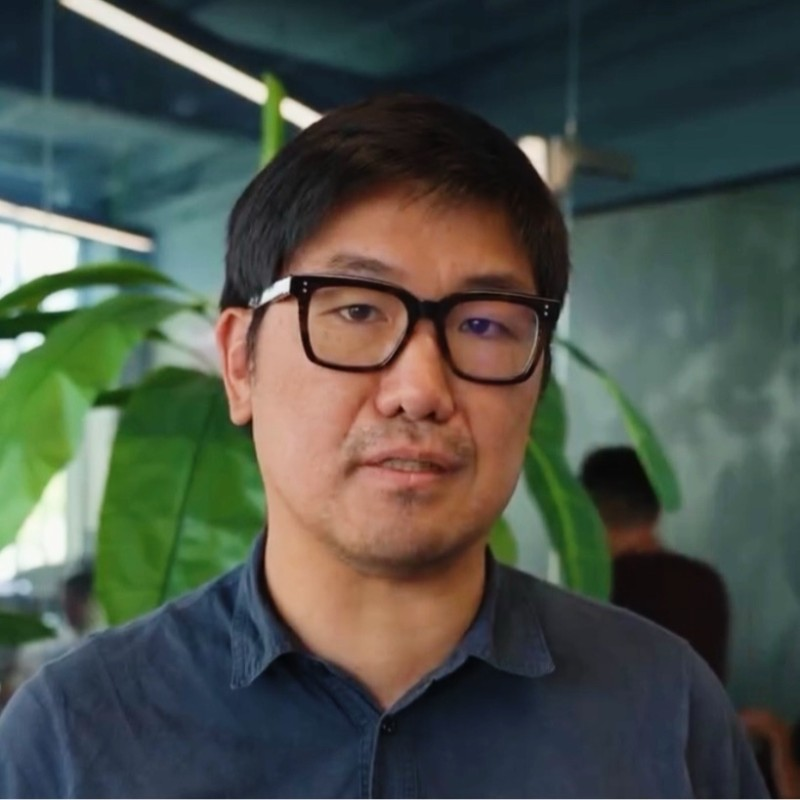



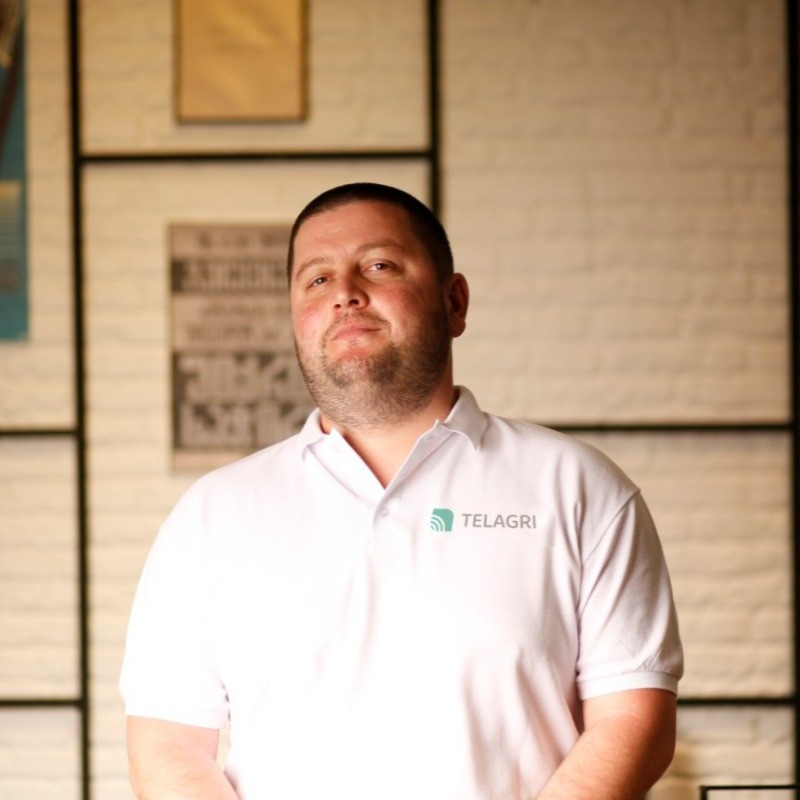
SPEAKER — KAZAKHSTAN

How AI turns legal documents into profitable industrial data · Alchemist Accelerator graduate · Energy Venture Day winner (S&P 500)
Format: video lectures + business-case analysis on SMILE + team discussions + exams
2.3 Trends and Market Cases
How does a venture fund choose which sector to enter? Why are some AI companies protected from copying while others disappear as soon as a new foundation model is released? This module gives direct access to the thinking of investors managing hundreds of millions of dollars.
A separate topic is how to move from Central Asia into global markets. Not in the abstract, but through specific programs, networks, and people: Astana Hub, Silk Road Innovation Hub, and bridges to Silicon Valley.
Subtopics
- How a global VC analyzes a market: sector selection, size, underserved niches
- Market mapping as a universal tool for analyzing an unfamiliar industry
- Where AI creates long-term value and where it remains a thin wrapper around someone else’s model
- Expertise and access to data as protection against technology commoditization
- Timing, constraints, and founder conviction — what actually determines the outcome
- Paths from Central Asia to global markets: programs, networks, specific mechanisms
Market vertical analysis
- Healthcare and life sciences · Fintech and DeFi
- Cybersecurity · Minerals and mining · Education and EdTech
- Operational automation · Compute infrastructure · Robotics
- Energy · Food and agriculture · Entertainment and creative industries
SPEAKERS — MARKET MAPS BY VERTICAL











SPEAKERS — PATHS FROM CENTRAL ASIA TO GLOBAL MARKETS



Format: video sessions with investors + market mapping + team discussions + exams
2.4 Applied Entrepreneurship Skills
You have a prototype. What next? This module is about distinguishing a problem customers will pay to solve from one that merely seems interesting. It is built around a six-criteria filter that screens out ideas before you spend six months on them.
The speakers here are diverse: investors, intellectual-property lawyers, CFOs, and the CEO of a brokerage company with a $100 billion market capitalization. Each covers a specific part of the journey from idea to first sales.
Six criteria for market demand
- Priority — how urgent the problem is for the person who pays
- Measurable ROI — whether the impact can be proven in monetary terms
- Time to value — how soon the result will become visible
- End-user adoption — who will actually use it
- Dissatisfaction with the status quo — why the current solution is inadequate
- AI feasibility — whether AI is truly the best tool here
Subtopics
- Customer discovery, scoring models, prototypes, and design partners
- Commercial moat: workflow integration, niche focus, switching costs
- Unit economics, pricing, and financial modeling for AI products
- Founder-led sales and the transition to a scalable go-to-market function
- Agritech: industry analysis, go-to-market strategy, and venture fundraising
- Biotech: how to enter deep tech and earn accelerator trust
- Cybersecurity: iterative development and protection from foundation models
- Enterprise B2B sales: how to sell before building the product and hire the first team
- Fintech: AI-based products in an industry built on trust
- Startup financing: reporting, CAC-to-LTV ratio, growth versus profitability
- Legal aspects: intellectual property, company structure, preparation for a funding round
MODULE LEAD — 22 SESSIONS

Former head of an AI fund and accelerator program under Andrew Ng · Board of Directors, Africa Deep Tech Community · Europe “30 Under 30”: Manufacturing and Industry
His 22 sessions cover the entire journey: prototype transformation, the six-criteria filter, idea discovery, technical assessment, design partners, TAM/SAM/SOM, competitive landscape, customer segmentation, lean startup, AI cost structure, unit economics, pricing models, financial model, first customer, and scaling go-to-market.
GUEST PRACTITIONERS — BY INDUSTRY







SPEAKERS — KAZAKHSTAN


Format: video case reviews + work on your own business model + SMILE cases + exams
2.5 Universal Skills for Leadership and Teamwork
AI writes code, generates text, and creates presentations. What it does not do is persuade people to follow, build trust, or make decisions when data is insufficient and a decision must be made now.
This module is built around the “Six Cs” concept and taught through practice: exercises, case reviews, and team feedback. The speakers are people who run unicorn companies, speak at TED, and train physicians to work with clinical AI.
Subtopics
- Cross-cultural communication and fluency in the international business context
- Persuasion, negotiation, and public speaking
- Storytelling and the founder’s personal brand
- Networking and building long-term relationships
- Collaboration, team dynamics, and conflict resolution
- Leadership development and personal growth
- Emotional intelligence and leadership based on service and ethics
- Critical thinking, creativity, and decision-making under uncertainty
- Resilience, growth mindset, and continuous learning
MODULE LEAD — 46 SESSIONS
The “Six Cs” concept is the result of field research in 25+ countries · From communication fundamentals to a continuous-learning plan · Creator of SMILE · President of Seeds of Empowerment
The 46 sessions cover everything: persuasion and negotiation, facilitation and feedback, conflict resolution, delegation, remote teams, intergenerational leadership, decision-making under uncertainty, emotional intelligence, crisis leadership, sales psychology, critical thinking, energy and stress management, growth mindset, personal brand, and founder financial literacy.
The key idea of the After Generative AI era: human capabilities become more valuable, not less, as AI takes over routine cognitive tasks.
Format: practical exercises using the “Six Cs” method + team sessions + case reviews + exam
2.6 Final Stage — MVP Project
Final week. Your team takes a real industry problem, builds a working prototype around it, and presents it the way teams do before an investor: slides and a video pitch.
This is the only assignment in the program where using AI to create content is prohibited. Not because AI is bad, but because the purpose of the project is to demonstrate your thinking, not the model’s thinking.
What you need to do
- Form a team and define the MVP concept — using tools from all modules
- Prepare a Google Slides presentation covering the 12 required stages
- Record a video pitch on YouTube: at least 3 minutes, English subtitles, all team members on camera
- Set access to “anyone with the link can view”
Twelve stages of the pitch
The AI evaluates the project on a weighted 120-point scale normalized to 100. The passing score is 70. Resubmissions are unlimited.
Real industry challenge
TAM/SAM, segmentation, users
Highest weight — 15 points out of 120
Why this solution
Monetization, unit economics
Positioning and moat
Go-to-market, channels, partners
Growth model (reduced weight)
Competencies, roles, gaps
Milestones (reduced weight)
Amount, use of funds, round
Long-term impact
LEAD
Graduation project pitch and presentation-format walkthrough · 33-minute video instruction + assessment criteria
The highest weight is Stage 3 (Solution / MVP, 15 points): clarity, logical justification, innovation, and meaningfulness.
Without a Google Slides presentation, a 20% penalty is applied to the final score.
The best projects are published for mentors and industry partners.
BLOCK 7 · HOW ASSESSMENT WORKS
Pass / Fail. Threshold — 70%.
No letter grades and no GPA. There is a quality threshold — and an unlimited number of attempts to reach it.
All assignments are completed on the Stanford SMILE platform. The AI system evaluates work using Bloom’s taxonomy — minimum level 4, meaning analysis rather than reproduction of information.
Types of assignments
- Knowledge exam — for each module
- Inquiry assessment — questions you formulate yourself (Bloom 4+, AI score 5+/10)
- Business-case analysis — identify weaknesses in a plan and propose a solution
- Open-ended assignments — connect concepts from different fields
- Practical experiments — code and lab reports from the Coding Handbook
- Final project — MVP, slides, and video pitch
Retakes are unlimited for any SMILE assignment.
SMILE assignments are in English; course lessons are in Russian, Kazakh, and English. Browser translation of assignments is allowed.
Upon completion of the program — AI-SANA Stage 3 certificate.
BLOCK 8 · CALL TO ACTION
Start Stage 3.
16 weeks. Your first working AI product. 40 people who have already taken this path.
Program 1 gave you understanding. Stage 3 gives you something you can show: a prototype, a pitch, a certificate, and insight into how investors making million-dollar decisions think.
The next generation of global technology leaders will emerge somewhere. The only question is whether you will be among them.
Free of charge · For AI-SANA Program 1 graduates · Platonus + SMILE platform
Upon completion — AI-SANA Stage 3 certificate
Lessons in Russian, Kazakh, and English · SMILE assignments in English
“Talent is everywhere. Opportunity is not.”
— Paul Kim, Stanford